Showing posts with label TV. Show all posts

Sunday, January 23, 2011

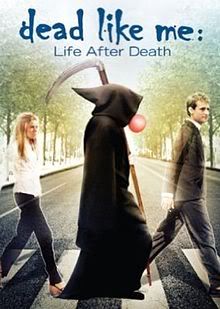
Dead Like Me: Life After Death


Dead Like Me: Life After Deathwas the straight to DVD movie that followed the critically acclaimed series, Dead Like Me, and attempted to give it some closure that it didn't get in its second (and final) season.

The movie starts with the restaurant where George, Daisy, Mason and Roxie all gathered together to get the day's reaping assignments from their boss, Rube, burning to the ground. Our quartet of protagonists are shocked to find their former boss no where in sight, and discover that he has finally moved on and that they have a new boss.

The movie manages to capture a lot of the charm of the series. However, a lot of issues just played out as cheap and contrived, in an attempt to bring closure in the space of a movie. George's reap causes her to become entwined with her younger sister's life. It felt forced and contrived, and served little purpose. The lack of closure for Reggie and Joy after George died (and, unbeknown to them, became a reaper) was part of what made the series so poignant.

The loss of Mandy Patinkin (who played the original boss of the reapers) was a big hit to the charm of the show, and it lost some of the structured feeling, as each of the reapers gave in to the excess provided by their new boss. While their characters didn't necessarily act out of character, they felt largely forced. The loss of his guidance forced the characters to make their own way, which was certainly an interesting plot, and better than many they could have done, but it jsut didn't feel bad.

Dealing with a reaper gone bad (their new boss) felt too much like one of the episodes in season 2. The emotional core of George and her sister again felt forced, with Reggie being involved in a secret romance and trying to find acceptance among her peers. This felt incredibly cheesy for the story.

All in all, it wasn't a bad ending for the series, and it wrapped up lose ends perfectly well, but it still managed to fall far short of the original series and leaves the viewer feeling disappointed.

Friday, January 14, 2011

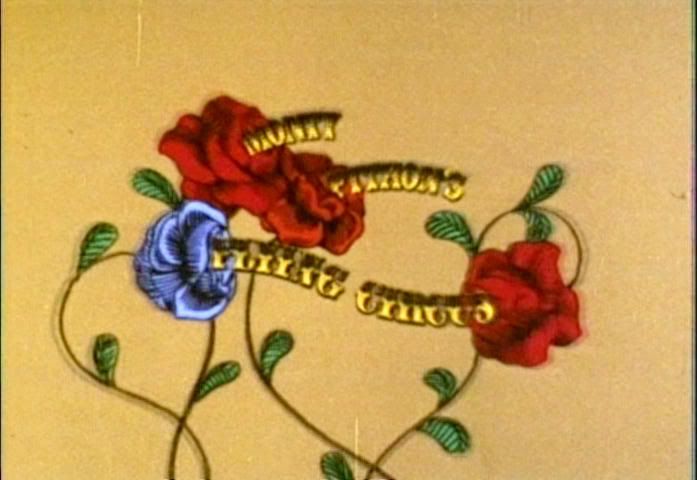
Monty Python


Monty Python is a collection of great comedians, creating great comedy.The British troupe had a gift for bringing together surreal and absurd comedy, and delivering it with straight faces. Their show, Monty Python's Flying Circus has created some of the most memorable sketches around, like The Lumberjack Song, Dead Parrot, and Spam.

The influence they had over comedy is incredibly clear as you can see hints of its influence in early SNL, and more. The movies that followed the end of the series, in particular The Holy Grail, have become cult classics, and elements from these movies have become so ingrained into our pop culture that we hardly even notice them anymore. "Just Look on the Bright Side of Life", coconuts has horse hooves, airspeed velocities of laden swallows, and more have become staples of our culture, as much as "lol", "tweet", and other such idioms.

Monty Python is why the Python programming language is called Python, why our junk-email is called spam, and why Lemony Snicket has a character named Uncle Monty.

Their humor may seem fairly mild today (for the most part), but in the late 60s through early 70s, they were defining the cutting edge, and pushing the boundaries of what was considered appropriate. Terry Gilliam's "stream of consciousness" styled animations are unique, even today. They create an abstract storyline that draws you in, and in many ways, cleanses the pattern of your mind. There is very little way to make sense of them, and if you just roll with it, it seems to clear your mind enough that you transition into the next sketch with a fresh outlook.

If you aren't familiar with Monty Python, or have only seen their movies, go hit Netflix and go through The Flying Circus. It's raunchy, it's hilarious, and you won't regret it.

Thursday, January 13, 2011

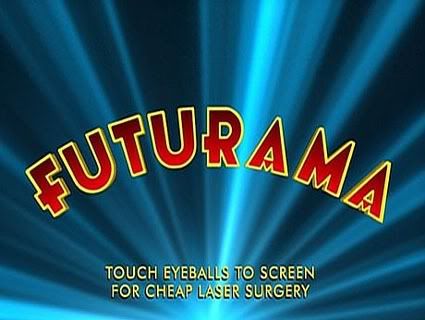
Futurama


Futurama is one of my favorite shows, and over the break (and a little before) I worked my way back through the series (thank you Netflix). I was almost surprised to see that the original 4 seasons have weathered the last ten years well.

The show was timeless. The jokes they made weren't so caught up in cultural relevance that they've lost their kick, and the various moral-of-the-story moments were universal enough that it didn't feel stale. the show is amusing, and lampoons social issues without beating you over the head with it.

The show is also visually impressive with its unique (for its time) blend of hand-drawn and CGI elements. It gave a look that was new and innovative for its time, and one that has never really been copied. You could look at a frame from Futurama, and you'd likely recognize it from the show immediately.

The show kept itself more or less on track, but since a strong timeline wasn't really necessary (it uses the sitcom standard that things more or less return to normal at the end of an episode), they could change it up a bit. We see varying version of Fry's freezing, a couple possibilities about the life of his dog, and even the all-important career chips get largely ignored throughout the season.

This change to the "canon" is done without a lot of excessive justification. They just do it, and instead of weighing it down, just run too fast over the top of it for it to be jolting to the viewer. This jostling of the plot isn't meant to insult the viewer's intelligence, or try to break up the already fairly sturdy plot. The writers would just get a new idea of what happened in certain events and let it roll. Screw the paradoxes, and just go with it.

The humorous show wasn't without its tear-jerkers though. The episode (Luck of the Fryish) of flashbacks to the time Fry spent with his brother is poignant, but without becoming maudlin. The final episode of season 5, The Devil's Hands are Idle Playthings, the series culminates with Fry finally being able to win Leela over enough that she at least considers and respects his feelings, and is a very tender ending to the series proper. And of course, the ending to Jurassic Park, as we watch Fry's faithful dog from the 20th century sit forlornly, waiting for his time-lost master to return has been said to be one of the saddest things on television.

The movies that followed, and wrapped up, the series were incredibly well done. In The Simpsons Movie as well, Matt Groening shows a knack for taking television shows to the big screen. Rather than trying to trump them up to Hollywood proportions, he makes them feel much more like extended episodes. All four of the movies were hugely entertaining, keeping both the moral lessons, and the jaunty humor rolling, ending with Fry and Leela finally confessing their love, and sharing their first kiss as the Planet Express ship flies straight into a wormhole.

It was a fitting end to the series, but when Comedy Central decided to bring it back, it was welcomed with open arms.While Fry and Leela's new romance altered the dynamic of the cast slightly, the show continued on, and managed to do so without having to repeat plotlines, and managed to come off as fresh as ever. Some fans have been disappointed, but that's only to be expected, I guess.

I'm not sure when the rest of season 6 will finish airing, likely next summer. But my DVR is waiting for it.

Monday, August 2, 2010

Avatar: The Last Airbender


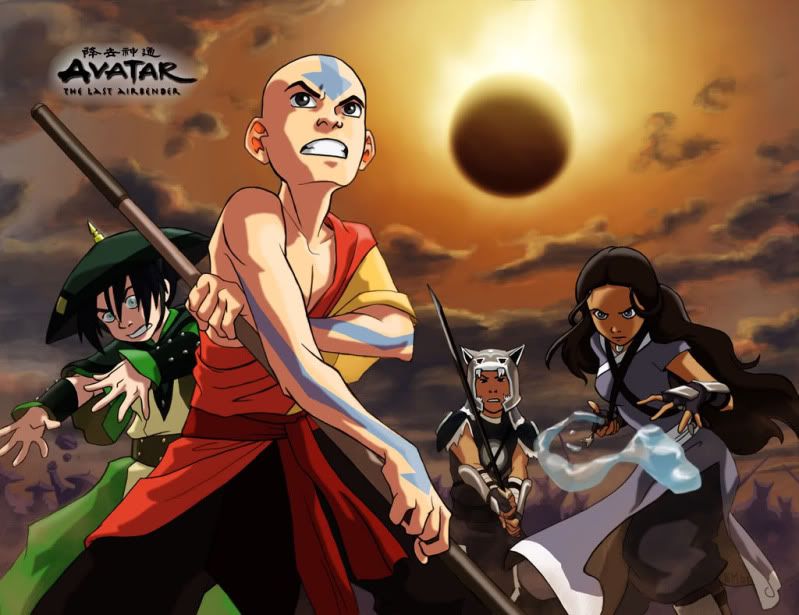
With a new movie out and a sequel series set to come out next year, I wanted to take a look at the Nickelodeon series Avatar: The Last Airbender.

The series is an incredible one, particularly for a children's show. while many shows today focus on 11 minute shorts, and even if they go out to the full 20+ minutes, there is rarely a continuous storyline.

TLA transcends this and creates a fully developed world, populated with realistic characters and a perpetual storyline that is both engrossing and well-rounded.

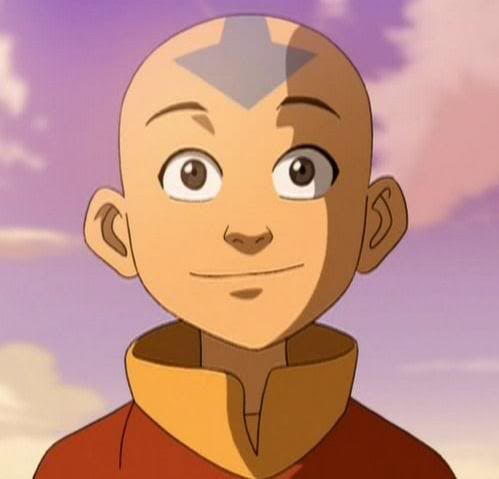
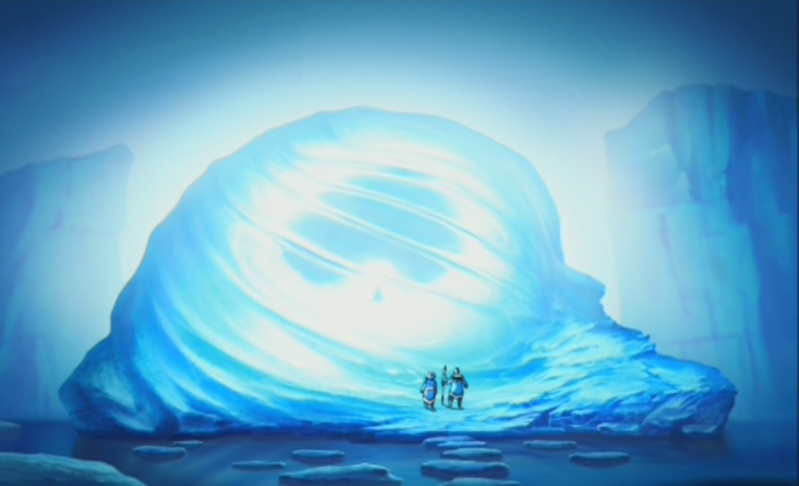
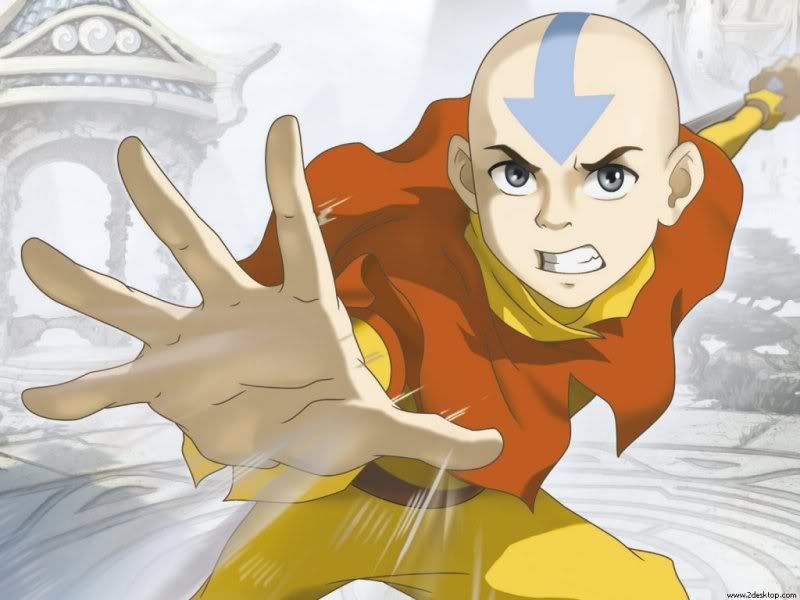
 We follow the young Airbender, Aang, as he emerges from a supernatural 100 year sleep. Just before running away and getting trapped in an iceberg, he learns that he is the Avatar. The Avatar has the ability to master all four elements (Water, Earth, Fire, Air) whereas normal benders can only master their nation's element. As such a powerful person, the Avatar maintains balance within the world, and can communicate with the Spirit World as well.

Aang was revealed as the Avatar four years early (typically it's revealed at age 16, Aang found out at 12) due to the aggressions of the Fire Nation. So this is all pretty overwhelming, and it's understandable that he fled for what he thought was a few days.

Once he is released from the iceberg he got trapped in, Aang discovers that his absence lead to 100 years of war and strife, as well as the massacre of his people.This drives him, with the help of the Water Tribe siblings Sokka and Katara who found and released him, to travel the world to find masters to teach him the remaining 3 elements so he can set things right.

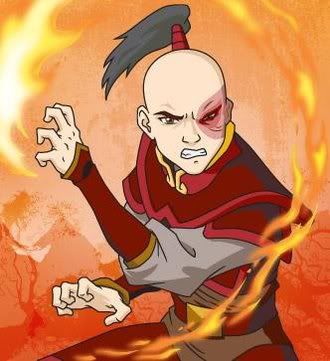
Meanwhile, he is hunted by Prince Zuko, exiled prince of the Fire Nation. His father banished him, and gave him the impossible-seeming task of finding the Avatar and capturing him before his exile can be lifted.

The series grows and develops with it's characters in a unique way that is not often seen in children's TV. We are introduced to a world with four distinct nations, each with it's own style of dress, mannerisms, local scenery and customs. The animals are all fantasy-like, often created by combining two "real world" animals (such as a platypus-bear or a rabbit-kangaroo). It seems rare to run across such depth of the story world in television. Those that don't simply use our own world tend to only develop what's absolutely necessary.

The characters are both believeable and likeable and go through a number of changes throughout the series to create characters who are very complex. We watch as Aang, who is carefree by nature, struggles to come to terms with all that he must be, and he learns to be less jesterly and more serious about the task at hand, while at the same time balancing his peaceful monk upbringing with the violent war we must fight.

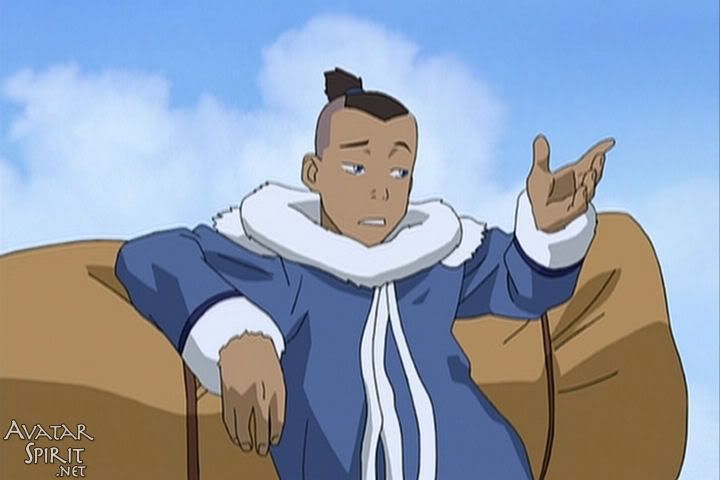
Sokka begins the show as mostly lazy and sarcastic, and yet with a deep drive to prove himself as a warrior to make his father (who he hasn't seen in years due to his father fighting in the war) proud. As the series progresses, we see him realize his potential as a leader and warrior.

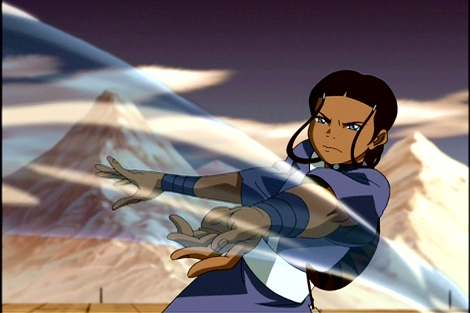
Katara is the last waterbender of her tribe. She grapples with discovering how to use her powers on her own, while suffering a great deal of guilt over the death of hers and Sokka's mother, who was killed by Fire Nation soldiers while she was protecting young Katara. She grows in her waterbending prowess, as well as providing a level head for "Team Avatar", as Sokka calls their little group, and making sure that everyone is cared for.

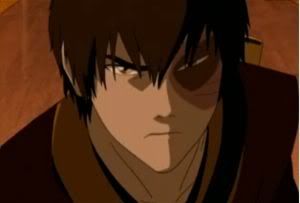
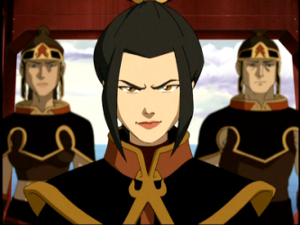
Prince Zuko is perhaps the most complex of all the characters, and certainly goes through the greatest transformation. At first, he is the banished prince, and defines himself by his desire to regain his honor in the eyes of his father, and fulfill his destiny, which he believes is to capture young Aang. As he clashes with his own people, culminating in a betrayal by his sister, the evil Azula, we watch him as he struggles to redefine his destiny and make his own choices in life. Guided by his mentor, his uncle Iroh, he begins a change that leads him down a difficult road to self discovery.

And those are just the four primary characters. We also get a host of other memorable, interesting characters, including many strong female charracters. One of the areas this show excels is in portraying various aspects of female personality while keeping them strong and capable. We see the nurterer, the tomboy, the truly evil, the cheerfully perky, the overly emotionally oppressed. Yet all of these are strong, capable and enthralling characters.

The bending movements of each nation are art in and of themselves. Each is based off a different style of Kung Fu, adding beauty and purpose to the bending movements. Each style was also carefully chosen to match the element it represents. Fire uses a ferocious and powerful style, Earth a more steady and controlled style, Water a slower more rhythmic style, and Air more spinning of the hands and body to simulate tornado like movements.

Visually, it is also beautiful. While each nation draws on heavily from Asian influence, each is unique and diverse. From the almost delicate construction of the Northern Water Tribe's ice city, to the floating citadels of the Air Nomads, to the strong walled fortresses of the Earth Kingdom, and the more traditionally styled Fire Nation, it is an incredible style that is so often lost today.

Emotionally, it showcases the power love, the dangers of obsession, the pain of loss, and struggle to do what you know is right against overwhelming odds. It is a rich, complex and diverse storyline keeps both children and adults interested.

If you have never watched the series, go give it a go. I think you'll enjoy, regardless of your age.


Jaded Scribe's Personal Favorite Episodes:


Book 1: Water
Southern Air Temple
Avatar Roku
The Storm
Siege of the North (2 parts)

Book 2: Earth
The Blind Bandit
Tales of Ba Sing Se
The Guru/Crossroads of Destiny (2 parts)


Book 2: Fire (Jaded's Favorite Season)
Sokka's Master
The Beach
The Avatar and the Firelord
The Western Air Temple
The Firebending Masters
The Boiling Rock (2 parts)
Sozin's Comet (4 parts)
Friday, May 14, 2010

My New Favorite "Writer"

I have found a new writer I'm absolutely in love with. Too bad he's not real.

Photobucket

Castle is ABC's new hit crime show that debuted last year mid-season. Richard Castle is a wealthy best-selling crime author (26 best-sellers, so think John Grisham or James Patterson) who uses his connections with the mayor and other such high-rollers to gain access to the NYPD shadowing Detective Kate Beckett as the inspiration for a new lead character to replace his recently fallen creation.

Richard Castle is charming, witty, handsome, suave and thoroughly fun to watch. Nathan Fillion puts forth a great perfomance that truly reels in the audience. From the opening of the episode where he is almost giddy with excitement to be cheking out a new crime scene to interactions with his mother and daughter, he's believable, fun, and always on. Despite a lack of (police) professionalism, he has a knack for solving crimes, bringing fresh eyes to the scene. Though his antics are often dangerous, cause problems on occasion, though naturally it all works out in the end.

Stana Katic stars opposite as Det. Kate Beckett. She's a very by-the-book officer who is good at what she does. Though usually very serious, she does banter with Castle in a way that feels real. Plot-wise, their relationship is complicated by the fact that she is a huge fan of Castle's novels (a fact that fuels Castle's ego to no end). It is amusing to watch her try to set that aside and deal with him as he is: far more annoying than she could have imagined.

The chemistry between these two is perfect. Castle has a blatant attraction for Beckett that he pursues every chance he gets, but Beckett rebuffs him. As an attempt to try to win her over, Castle works on the case of Beckett's mother's murder on the down-low.

This show takes the standard crime procedural and adds a depth many of the others avoid. Not only do we see a great deal of the personal interactions and personal story that shows like Law & Order leave to the side unless they're pulling it out for sweeps. It also brings in a lot of humor and banter, again more-so than its more dramatic counterparts.

It has its occasional lapses, primarily in that Castle gets his case-solving epiphany via his family (primarily his daughter and live-in mother). Whether they provide it in conversation or through action that sparks an idea, it can be occasionally forced and unnatural. But, usually it isn't painfully so.

Great fun, great characters, great mysteries. If you haven't watched it yet, give it a go. I've only only watched the second half of the first season (in one day) and I have rarely been so hooked on a TV show.

As a side-note, the novel that Richard Castle is writing during the first season of the series Heat Wave has been published by ABC using the pen name (of course) Richard Castle. I plan on checking it out soon.