Monday, January 17, 2011

Achievements and Gaming


Achievements have been around for a while. But until this latest console generation, it has been largely up to the individual games as to whether or not to include them, or what their depth and breadth would be. But, with PS3, XBox 360 and PC all offering them, it adds a new dimension to the games we play.

Achievements encourage us to fully experience the game, perhaps pushing us to sample aspects of the game they might otherwise bypass. And they do so in a way that is non-intrusive. Participating is not forced on the player (unless the player is completionist and OCDs over getting all the achievements for a given game), allowing us to avoid things that we just don't want to mess with.

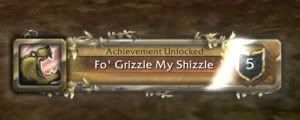
World of Warcraft is definitely the most prolific with achievements. With well over 1000 achievements, and pertaining to all aspects of the game, any player can feel accomplished by how many achievements they can get. Raids and dungeon groups are encouraged to complete fights in more difficult ways, and players are encouraged to actively pursue PvP activities. But no one loses out on any kind of substantial rewards if they skip, merely cosmetic ones.

This is the best kind of achievement system. You don't want a game to force you to do a bunch of stuff you don't want to in order to gain important rewards. Achievements should reflect your dedication and skill, not be a requirement to complete the game.

They also increase replay value as you have more incentive outside of curiosity to see all the endings, or find all the secret items. I never got all the flags or killed all the Templars in Assassin's Creed because there weren't trophies associated with them. There was no point for me. While there is that sense of personal satisfaction, that's all. You don't get anything tangible that you can quickly compare with friends.

It has expanded the interest in individual games, and their replay value, but have remained just weak enough of a pull that games can't used them as a crutch. They can't expect a bad game to float along just because gamers will be trying to get the achievements.

The Wii needs to get on the bandwagon. It's one of the downsides of playing games on the Wii. The lack of achievement support just makes a game feel less fun. Not all games offer their own achievements, and those lacking them leave one feeling little incentive to explore the game to its full capacity. It may be a trend caused by the increasing need in our society for something tangible, rather than enjoying intangible satisfactions, but its the reality we live in.

As we progress through the future, achievements won't be going away. They are too powerful of a tool for game developers to help focus the player on varying aspects of the game for developers to give them up, and players enjoy getting them enough that it will continue to hold our interests.

Cross-Platform Gaming


Console wars have existed since consoles were introduced in the 1980s. Talk to any gamer, and they will quickly be able to tell you why their favorite platform is the best. Whether PS3 or XBox, PC or Wii, we all have our favor
Each platform, though, does seem to have its niche. The Wii is great for family games, the PC great for RPGs and RTS (where great amounts of hotkeys and the fine control of the mouse can improve the experience), the XBox seems to be best at more "grown-up" games, and the PS3 lives in a great middle ground.

But, the divisive lines get a little silly. Most titles are available cross-platform. Assassin's Creed II is going to be just as good, regardless of what you play on.

I think the time has come for the various platforms to stop fighting with each other, and embrace each other, at least to an extent.

Most cross-platform games have primarily the same kind of achievements and trophies, and the same kind of multiplayer. In the upcoming Portal 2, gamers will be able to connect via Steam to play multiplayer across both PS3s and PCs. I think that this is a huge step in the right direction.

One of the hardest things about playing multiplayer is that your friends cannot always play with you. If I have AC Brotherhood for PS3 and my friend has XBox, we're not going to be able together. The platforms need to come together and embrace each other. We need to support cross-platform multiplayer, cross-platform friend lists and chat, and cross-platform comparison of achievements.

By doing this, we can start to break down the walls of console partisanship, and start to create a more open arena, where players can choose based solely on their own personal preference, rather than what they feel will keep them better connected with their friends.

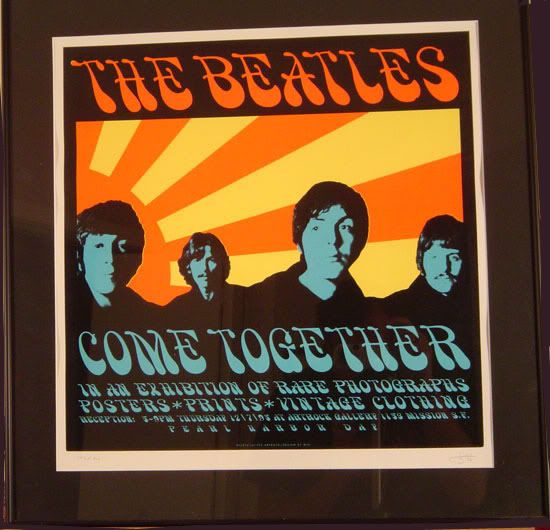
Come on guys, lets come together.

Saturday, January 15, 2011

Wizard of Oz


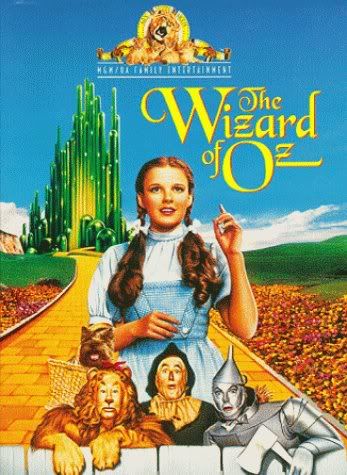
A couple weeks ago I was watching Wizard of Oz with the kids. I've seen before, of course, but not in years. I was actually very impressed with the quality of the film, and the special effects, particularly given that it was made 72 years ago.

The story, of course, is timeless. The novel came out 1900, and even 111 years later, its still a story filled with heart and magic, and entirely entertaining. The journey of Dorothy as she learns how important friendship and family is, and learns the importance of intelligence, courage and love.

Aside from being visually beautiful, the actors are filled their parts perfectly. Judy Garland's Dorothy creates a charming heroine, but one with faults that she must overcome. Almost surprising for the time period, Dorothy does not come across as a damsel-in-distress, and aside from being a little naive, has the spunk to be a formidable foe for the Wicked Witch. She travels through the land of Oz, eager to get to her destination and find her way home, and remains resolute in the face of danger, even when the Wicked Witch offers her safety in return for the ruby slippers.

The Scarecrow creates a charming, clutzy, and loyal character to help guide Dorothy through the hazards of Oz. Initially, the studios wanted to hint at a future romance between Dorothy and the farmhand counterpart to Scarecrow. While this was cut from the film, you still can see the chemistry between them, and see the affection they have for each other.

The Tin-Man is caring and compassionate, and provides the moral compass for the group, helping them remember to be kind to others, and take the moral high ground. The Cowardly Lion provides excellent comic relief, and his character has become widely recognizable. His fear at the silliest things helps keep things lighthearted when the movie takes darker turns.

The Wicked Witch was masterfully portrayed by Margaret Hamiltion, and her character has become iconic. She provides the perfect amount of pure evil, and creates a formidable foe for Dorothy and her friends. She is thoroughly well-developed, and has a fullness to her character that many other similar movies lack in their villains.

A story of friends, love, and perseverance makes this movie into a timeless classic that will still be popular for years to come. An instant classic, and one of the best movies out there.

Friday, January 14, 2011

Monty Python


Monty Python is a collection of great comedians, creating great comedy.The British troupe had a gift for bringing together surreal and absurd comedy, and delivering it with straight faces. Their show, Monty Python's Flying Circus has created some of the most memorable sketches around, like The Lumberjack Song, Dead Parrot, and Spam.

The influence they had over comedy is incredibly clear as you can see hints of its influence in early SNL, and more. The movies that followed the end of the series, in particular The Holy Grail, have become cult classics, and elements from these movies have become so ingrained into our pop culture that we hardly even notice them anymore. "Just Look on the Bright Side of Life", coconuts has horse hooves, airspeed velocities of laden swallows, and more have become staples of our culture, as much as "lol", "tweet", and other such idioms.

Monty Python is why the Python programming language is called Python, why our junk-email is called spam, and why Lemony Snicket has a character named Uncle Monty.

Their humor may seem fairly mild today (for the most part), but in the late 60s through early 70s, they were defining the cutting edge, and pushing the boundaries of what was considered appropriate. Terry Gilliam's "stream of consciousness" styled animations are unique, even today. They create an abstract storyline that draws you in, and in many ways, cleanses the pattern of your mind. There is very little way to make sense of them, and if you just roll with it, it seems to clear your mind enough that you transition into the next sketch with a fresh outlook.

If you aren't familiar with Monty Python, or have only seen their movies, go hit Netflix and go through The Flying Circus. It's raunchy, it's hilarious, and you won't regret it.

Thursday, January 13, 2011

Futurama


Futurama is one of my favorite shows, and over the break (and a little before) I worked my way back through the series (thank you Netflix). I was almost surprised to see that the original 4 seasons have weathered the last ten years well.

The show was timeless. The jokes they made weren't so caught up in cultural relevance that they've lost their kick, and the various moral-of-the-story moments were universal enough that it didn't feel stale. the show is amusing, and lampoons social issues without beating you over the head with it.

The show is also visually impressive with its unique (for its time) blend of hand-drawn and CGI elements. It gave a look that was new and innovative for its time, and one that has never really been copied. You could look at a frame from Futurama, and you'd likely recognize it from the show immediately.

The show kept itself more or less on track, but since a strong timeline wasn't really necessary (it uses the sitcom standard that things more or less return to normal at the end of an episode), they could change it up a bit. We see varying version of Fry's freezing, a couple possibilities about the life of his dog, and even the all-important career chips get largely ignored throughout the season.

This change to the "canon" is done without a lot of excessive justification. They just do it, and instead of weighing it down, just run too fast over the top of it for it to be jolting to the viewer. This jostling of the plot isn't meant to insult the viewer's intelligence, or try to break up the already fairly sturdy plot. The writers would just get a new idea of what happened in certain events and let it roll. Screw the paradoxes, and just go with it.

The humorous show wasn't without its tear-jerkers though. The episode (Luck of the Fryish) of flashbacks to the time Fry spent with his brother is poignant, but without becoming maudlin. The final episode of season 5, The Devil's Hands are Idle Playthings, the series culminates with Fry finally being able to win Leela over enough that she at least considers and respects his feelings, and is a very tender ending to the series proper. And of course, the ending to Jurassic Park, as we watch Fry's faithful dog from the 20th century sit forlornly, waiting for his time-lost master to return has been said to be one of the saddest things on television.

The movies that followed, and wrapped up, the series were incredibly well done. In The Simpsons Movie as well, Matt Groening shows a knack for taking television shows to the big screen. Rather than trying to trump them up to Hollywood proportions, he makes them feel much more like extended episodes. All four of the movies were hugely entertaining, keeping both the moral lessons, and the jaunty humor rolling, ending with Fry and Leela finally confessing their love, and sharing their first kiss as the Planet Express ship flies straight into a wormhole.

It was a fitting end to the series, but when Comedy Central decided to bring it back, it was welcomed with open arms.While Fry and Leela's new romance altered the dynamic of the cast slightly, the show continued on, and managed to do so without having to repeat plotlines, and managed to come off as fresh as ever. Some fans have been disappointed, but that's only to be expected, I guess.

I'm not sure when the rest of season 6 will finish airing, likely next summer. But my DVR is waiting for it.

Wednesday, January 12, 2011

David Eddings: The Work of a Storytelling Master


David Eddings has long been my favorite author. His talent for epic fantasy is amazing. His characters are well-developed and have a depth to them far beyond that of many other books. While their roles may be stereotypical (the young hero, the might sorcerer, etc etc), he gives to each of them a unique flavor.

While you will find similar characters in all of his books, they have enough individual idiosyncracies that they never feel dull, or simply copies of other characters.

His first jaunt into the world of fantasy (with only one novel published before that) was good enough to end up with 12 novels (starting with two 5-book arcs and two companion novels), and a companion book providing some of his notes and whatnot. His next story landed two trilogies. He followed that up with a single-volume novel (mostly to prove to himself that he could write a sweeping fantasy in just one book), and his latest is a four-book arc. He also published his second novel (written in the 1970s, not published until the 1990s), and a thriller in 2002.

This success is absolutely amazing. To end a career with 27 published novels is astounding.

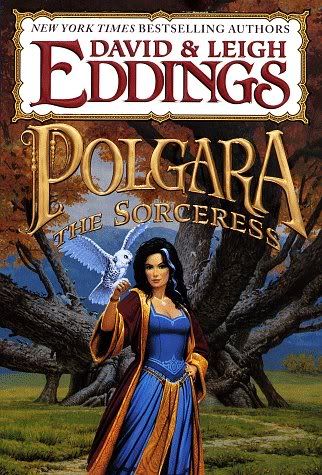
In looking up a couple things for this entry, I discovered that I missed his passing in 2009. The industry truly lost a titan who was a master of the craft. Like many of his fans, his books had a profound effect on my life. I can still, 12 years later, remember the day I stumbled across him. I was at Barnes & Noble with my mom, just browsing through books. I kept a little notebook in my pocket when we went to bookstores to jot down books that caught my eye to look for later at the library. I stumbled across Polgara the Sorceress, and the cover caught my imagination, and the back-cover blurb clinched it for me. I checked it out later that week, and was caught instantly. I read it everywhere. At lunch, in class after finishing my work, at home. I devoured it in just a couple of days. After that, I moved on to his other books.

They still amaze me, and settling in to reread them is like reconnecting with an old friend. I reread Polgara, Belgarath, The Belgariad and the Mallorean once or twice a year, and typically all in a row. It always renews my sense of adventure, and helps put all the little problems in my life into perspective.

The worlds he created were well-developed, and spanned across continents, mapped out in great detail, and filled with a score of minor characters. Each country had its own geography, its own dress, its own customs.

Each book even went beyond simply providing an epic story, but probed at ideas much larger. The meaning of destiny, the meaning of religion, the meaning of time.


Of all of his books, Polgara the Sorceress has always been my favorite. Expanding on the already deep world of the Belgariad and the Mallorean, its two companion novels, Belgarath the Sorcerer and Polgara the Sorceress take a step back and go through the events leading up to those books.

Polgara the Sorceress is, even on its own, a rich story spanning the three thousand years in which Polgara served the destiny that had been provided for. Her gentle pain at watching her friends and her family (except her father, Belgarath) grow old and die is heartbreaking. And throughout the story (which is told in the first person) you even get little quips and jabs made towards the characters of the Belgariad, providing humor throughout the story.

Eddings' books are funny, filled with adventure and memorable characters. Whenever I finished one of his series, there was always a kind of melencholy. Eddings draws you so completely into the world of these people that you become emotionally tied up in them, and saying goodbye, knowing that their stories are done, is sad. Even though the story is done, and Eddings ties up all the loose ends, he leaves his world moving forward, and I always sat back and wondered what happened to these characters as their lives progressed after the adventure and into the newly changed world.

If you haven't read one of his books yet, go and do so. You won't be disappointed.

Tuesday, January 11, 2011

XBox and Kinect


One of the big releases this year was XBox's Kinect system. At first, my husband and I weren't overly interested in the Kinect. It looked pretty cool, but just not enough to justify the price for us. But, this Christmas, our 7-yr-old went over our heads to the big man in red himself, and we found a shiny new XBox with Kinect under our tree.

Overall, I've found to be an impressive system. The time delay between reading your actions and executing them on the screen is no more than any other controller (which is actually rather impressive when you consider how many calculations it has to do to translate full-body movement). The voice commands work fairly well, as long as you speak clearly. The infra-red sensors even recognize you when you're signed in, so if someone has to cut in front of you while you're playing, it doesn't read their movements as input.

However, it is not without its drawbacks. Our playing space is 6.5 feet deep, and the sensor sits about 5.5 feet above the floor. Usually, this is suitable for a lot of gameplay. But when doing movements that lift over my head, or involve laying on the floor (usually during working out), the angle doesn't quite pick it up correctly, and the floor-based movements especially get largely cut off.

Calibrating the sensor is fairly easy and intuitive. Initially, you just stand with a little card (that comes with Kinect) and adjust it to fit into a certain space, then the system scans it. Fine-tuning for a play session just simply requires standing still in the center of your play space while it reads your body and adjusts accordingly.

However, I have yet to find any way to fine-tune it manually where you can adjust the viewing angle on your own. This would have been a huge improvement, especially if it could be done on the fly during gameplay without having to quit out of your current game session. Adding this alone would make problems with movements that extend upwards, or require laying on the floor, almost completely go away.

The Kinect holds a lot more potential than I really granted it when I heard about it. Workout games (which I'll be talking about in more detail later this month), dance games, and the like are all a lot more fun with the Kinect. The ability to do engage in games without having to figure out the best way to hold a controller makes it a lot more fun, and a lot easier to just dive into the action.

I haven't messed around with it a whole lot outside of my workout game, but I think as time goes on, Kinect is just going to get better and better.